A Fifth-Generation
Washingtonian.
Civic leader. Public safety innovator. Islamic educator. Community servant. Twenty years of documented results at the highest levels of Washington, DC governance.

Karen Gaal.
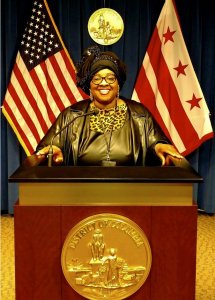
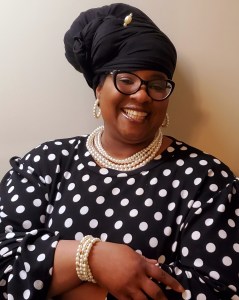
Karen Gaal is a nationally recognized public safety strategist, disability rights advocate, community systems architect, and faith-centered civic leader with more than 30 years of experience building safer, more accessible, and more resilient communities throughout Washington, DC.
She serves as Chairwoman and Public Safety Director of the Third District Citizens Advisory Council (3D CAC), leading community-based public safety initiatives serving 180,000+ residents across eight Police Service Areas. She is also the Founder of the Karen Gaal Institute, Founder and President of the 3D CAC Community Safety Foundation (3D Safety Foundation), and Founder of Power In Sisters – Sister Power, a global women’s leadership and empowerment movement active in 12 countries.
Her work bridges public safety, disability rights, civic engagement, emergency preparedness, faith-based leadership, nonprofit strategy, and institutional development. Karen is known for transforming community concerns into sustainable systems, strengthening partnerships across government and community sectors, and developing leaders who create lasting impact.
“Communities deserve more than temporary solutions. They deserve systems that protect dignity, develop leaders, and build the capacity to solve tomorrow’s challenges together.”
Karen’s leadership philosophy is grounded in three principles: Systems. Dignity. Capacity Building. Whether advancing disability rights, mobilizing Block Captains, strengthening community-police partnerships, or mentoring civic leaders, she focuses on transforming concern into capacity, advocacy into policy, and relationships into lasting institutions.
Her Islamic leadership reflects the same commitment to service. She founded Power In Sisters – Sister Power in 1995, established AKA Muslimahs in 2006, leads the Friday Sisters Halaqah, directs The Path of Light Program, and authored the eight-volume Islamic Leadership Reflection Workbook Series. For Karen, leadership is not about becoming indispensable. It is about building people, partnerships, and systems that continue serving long after the meeting ends.
“I believe in showing up. It is the investment in people that translates into transformational change in our communities.”
She is also the founder of Power In Sisters – Sister Power, established in 1995 and now active in 12 countries, and the leader of The Path of Light Program and Friday Sisters Halaqah.
Full Biography
Karen Gaal
Community Development, Public Safety, Veteran Advocacy and Leadership
Karen Gaal is a fifth-generation Washingtonian and lifelong Ward 1 resident whose more than 30 years of service have been devoted to strengthening communities, developing leaders, advancing public safety, supporting veterans and military families, building institutions, and creating practical solutions to complex neighborhood challenges across the District of Columbia.
Her work sits at the intersection of community development, public safety, veteran advocacy, resident leadership, workforce and adult education, emergency preparedness, youth and emerging-leader development, small-business and commercial-corridor vitality, public policy, nonprofit capacity building, and cross-sector partnership development.
Throughout her career, Karen has operated from a fundamental belief that strong communities are built when residents are informed, connected, prepared, supported, and given meaningful opportunities to lead. Her work is therefore not limited to responding to individual problems. She focuses on building the people, systems, partnerships, and institutions that allow communities to become safer, stronger, more resilient, and more economically viable over time.
Karen serves as Chairwoman and Public Safety Director of the Third District Citizens Advisory Council of the Metropolitan Police Department and as Chairwoman and Executive Program Director of the 3D CAC Community Safety Foundation, Inc., publicly known as the 3D Safety Foundation. Her leadership supports a community of approximately 180,000 residents across eight Police Service Areas and a network of more than 500 volunteers, community leaders, and partners.
Public Safety as Community Development
A defining feature of Karen’s work is her belief that public safety cannot be separated from neighborhood stability, economic opportunity, resident confidence, business vitality, and quality of life.
Her public-safety leadership extends far beyond traditional crime prevention. She has developed, coordinated, supported, and expanded initiatives involving PSA Block Captains, Public Safety Ambassadors, Junior Block Captains, 3D CAC Cadets, Safe Passages, Camera Connect outreach, de-escalation education, emergency preparedness, neighborhood safety walks, public-safety forums, crime and conditions tracking, QR-code community reporting systems, nightlife and commercial-corridor safety initiatives, victim-support navigation, reentry partnerships, resident education, and community-police engagement.
Karen also leads and supports issue-focused public-safety structures addressing persistent neighborhood and corridor conditions. These include the T Street/Shaw Public Safety Task Force, U Street/Logan Circle initiatives, Columbia Heights/Mount Pleasant initiatives, North Capitol/Truxton Circle efforts, the Pastoral Clergy Coalition, and other multi-agency neighborhood stabilization efforts.
Her approach recognizes that community conditions are interconnected. Vacant and neglected properties, sanitation, lighting, transportation, sidewalk conditions, behavioral-health needs, human-service access, public-space management, commercial activity, youth safety, business conditions, and government responsiveness can all affect whether residents feel secure and whether a neighborhood is positioned to thrive.
Rather than treating those conditions as separate agency issues, Karen works to bring the relevant government agencies, residents, businesses, service providers, faith institutions, nonprofit organizations, and public-safety partners around the same table.
Her emphasis is consistently on moving from conversation to action through clearly defined responsibilities, written action items, deadlines, documentation, follow-up, and accountability.
Neighborhood Stabilization and Commercial-Corridor Vitality
Karen’s work demonstrates a sustained commitment to protecting and strengthening the neighborhoods and commercial corridors that form the economic and social backbone of Washington communities.
She has helped coordinate efforts involving public-space conditions, vacant and neglected properties, infrastructure, transportation, sanitation, lighting, pedestrian safety, business engagement, social-service needs, and public-safety conditions.
Her work in the T Street, U Street, Shaw, and surrounding corridors illustrates this integrated approach. Rather than viewing a corridor solely through a crime lens, Karen examines the full ecosystem affecting its success: business vitality, public infrastructure, vacant properties, resident confidence, public-space management, behavioral-health and human-service access, sanitation, transportation, and community investment.
She also recognizes local businesses as essential neighborhood institutions.
Through Camera Connect, business safety engagement, commercial-corridor problem solving, community partnerships, and Neighbor2Neighbor DC by 3D CAC, Karen works to strengthen connections among residents, locally rooted businesses, nonprofits, cultural institutions, faith communities, government resources, and neighborhood anchors.
Her philosophy is simple: businesses are more likely to thrive when neighborhoods are stable, residents feel connected, public spaces are well managed, and institutions work together.
DC SafeConnect — Public Infrastructure Innovation
Karen’s systems-level approach is also reflected in the development and advocacy of DC SafeConnect, a proposed citywide Public Safety and Visitor Service Station initiative.
The concept is designed to provide residents and visitors with access to emergency assistance and essential District services even when a personal phone is unavailable, lost, stolen, damaged, disconnected, or without power.
The proposed stations would provide functions including free Wi-Fi, nationwide calling, device charging, information on District services, maps and transportation assistance, direct access to 311, accessible public information, emergency alerts, and a location-identifying two-way 911 connection.
Karen has advanced DC SafeConnect as more than an emergency communications kiosk. It is envisioned as a piece of modern public infrastructure connecting public safety, emergency preparedness, digital equity, accessibility, transportation, visitor assistance, neighborhood connectivity, government services, and economic development.
The initiative reflects Karen’s broader leadership philosophy: identify a recurring problem, understand the systems contributing to it, develop a practical solution, and build the partnerships and public-policy framework necessary to test and scale that solution.
Developing Residents Into Community Leaders
Karen has spent much of her career helping residents move from concern to participation and from participation to leadership.
Through PSA Block Captains, Public Safety Ambassadors, community training, emergency preparedness, civic education, task forces, public meetings, and neighborhood initiatives, she creates pathways for residents to become informed advocates and community problem-solvers.
Her approach is rooted in the belief that government and nonprofit organizations cannot build strong neighborhoods alone.
Residents must have the information, tools, confidence, relationships, and opportunities necessary to participate meaningfully in shaping their own communities.
Investing in the Next Generation
Karen is equally committed to ensuring that community leadership continues beyond the current generation.
Through the 3D CAC Cadets, Junior Block Captains, and the TILMW Emerging Leaders Program, she provides young people and emerging adults with opportunities to develop civic awareness, leadership skills, responsibility, confidence, public-service experience, and practical community problem-solving abilities.
Her emerging-leader work is not designed as leadership education in theory alone.
Participants are exposed to real community issues and given meaningful opportunities to serve, interact with established leaders, understand government and community institutions, develop solutions, and assume increasing responsibility.
The goal is to help create future community, nonprofit, business, civic, and public-service leaders who are prepared not only to participate in their communities but ultimately to lead them.
This emphasis on leadership succession is an important part of Karen’s legacy. She does not view successful leadership as remaining indispensable. She believes strong leadership includes preparing others to carry the work forward.
Workforce, Education and Human-Capital Development
Karen’s community-development work also includes a longstanding commitment to workforce development, adult education, public education, training, and human-capital development.
Her work has included or supported initiatives involving adult literacy, GED readiness, workforce development, reentry, leadership training, public-safety education, emergency-preparedness training, crisis de-escalation, volunteer development, youth leadership, and civic education.
She views education and workforce development as essential community-development tools because economic opportunity depends not only on jobs being available but on residents having the knowledge, skills, confidence, and connections required to pursue those opportunities.
Her work consistently centers the development of people alongside the development of programs and institutions.
Veterans and Military Families
Veteran advocacy and support for military families have become another important component of Karen’s community leadership.
Through 3D CAC and the 3D Safety Foundation, Karen works to strengthen connections among veterans, military families, government services, community organizations, Veterans Service Organizations, and opportunities for meaningful civic participation.
Her work includes an authorized partnership with the Mayor’s Office of Veterans Affairs, supporting two-way community referrals.
Through that relationship, veterans identified through 3D CAC’s community network can be connected to benefits, claims assistance, behavioral-health resources, government services, and other supports, while veterans who want to remain engaged in service can be connected to civic and community-leadership opportunities such as the PSA Block Captain network.
Karen’s veteran advocacy extends beyond benefits navigation.
Her work emphasizes wellness, belonging, family support, civic participation, community connection, coordinated advocacy, veteran-serving partnerships, and opportunities for veterans to continue contributing to the District after military service.
She has also advanced the concept of stronger infrastructure connecting veterans and military families with government, community organizations, service providers, Veterans Service Organizations, cultural activities, advocacy networks, and neighborhood institutions.
Her approach reflects a conviction that service to veterans should recognize the whole person: their benefits, health and wellness, family, identity, community relationships, leadership abilities, and continued capacity to serve.
Faith-Based and Community Support
Karen’s leadership also recognizes the important role of faith institutions in neighborhood stability and community care.
Through the Pastoral Clergy Coalition, she has worked to strengthen collaboration among faith leaders, public-safety partners, residents, and community institutions.
Faith institutions often serve as trusted points of contact during emergencies, family crises, violence, displacement, grief, and neighborhood instability.
Karen’s work helps connect that trust with practical public-safety education, community resources, crisis response, referrals, and broader neighborhood problem solving.
Reentry, Victim Support and Community Navigation
Karen’s community leadership includes efforts to strengthen support for returning citizens, victims, families, and residents navigating complex government and social-service systems.
She has developed and supported partnerships involving reentry organizations, victim-support services, government agencies, faith institutions, behavioral-health providers, workforce organizations, and community-resource networks.
Her work emphasizes warm connections and practical navigation rather than simply providing residents with a phone number or website.
That philosophy is consistent across much of her work: identify the need, connect the individual to the appropriate resource, strengthen the relationship between organizations, and create a system capable of serving the next person more effectively.
Emergency Preparedness and Community Resilience
Emergency preparedness is another major component of Karen’s service.
As a FEMA-trained emergency-management professional and experienced CERT leader, trainer, and program manager, she has helped residents and community organizations understand that resilience begins before an emergency occurs.
Her work emphasizes preparedness, resident training, household and neighborhood readiness, emergency communications, volunteer coordination, community resilience, and practical response capabilities.
This work reinforces her larger approach to community development: communities are stronger when residents have the knowledge and skills to respond effectively to both everyday challenges and major emergencies.
Government Accountability and Public Policy
Karen has testified before the Council of the District of Columbia and regularly engages District agencies, public officials, and government leadership on neighborhood conditions and community priorities.
Her advocacy has addressed issues involving public safety, youth and family needs, infrastructure, neighborhood investment, government accountability, veterans, commercial corridors, public space, and access to community resources.
She combines resident engagement with research, documentation, data, policy analysis, agency coordination, written advocacy, public testimony, and sustained follow-up.
Karen is known for translating individual complaints and neighborhood concerns into organized issues that government leaders can understand, evaluate, assign, and act upon.
Building Cross-Sector Partnerships
One of Karen’s strongest leadership abilities is coalition building.
Her work regularly connects the Metropolitan Police Department, District government agencies, nonprofit organizations, residents, businesses, Advisory Neighborhood Commissions, faith institutions, educators, workforce and reentry organizations, veterans organizations, public-health and behavioral-health partners, emergency-management professionals, and civic organizations.
She believes that complex community challenges rarely belong to one organization or agency.
As a result, her work focuses on building structures where multiple stakeholders can understand their roles and contribute to a common solution.
Her measure of a successful partnership is not simply whether people attended a meeting.
It is whether the partnership produced stronger relationships, clearer responsibilities, greater access to resources, measurable action, and improved community conditions.
Institution Building and the 3D Safety Foundation
Karen’s commitment to long-term community capacity contributed to the establishment of the 3D CAC Community Safety Foundation, Inc., publicly known as the 3D Safety Foundation.
The charitable organization provides a platform for expanding public-safety education, emergency preparedness, resident leadership, youth and family initiatives, leadership development, Safe Passages, veteran and military-family support, adult education, community-resource navigation, and community-resilience programming.
Through the Foundation, Karen is working to transform years of community-based leadership and volunteer experience into sustainable organizational infrastructure that can attract resources, develop programs, measure outcomes, strengthen partnerships, and continue serving District residents into the future.
Education, Training and Professional Preparation
Karen holds a Master of Public Policy and Administration and a Master of Business Administration from American University, along with a Bachelor of Science in Computer Science from Wake Forest University.
Her professional background also includes extensive education and training in public administration, emergency management, community resilience, public-safety education, de-escalation, safety, inspections, strategic planning, program development, and leadership training.
This interdisciplinary background has helped her bridge community experience with policy, operations, technology, public administration, nonprofit development, and organizational strategy.
Recognition and Service
Karen’s honors include the 2025 HerStory Award, 2025 Humanitarian of the Year Award, 2025 DC Dynamic Leadership Award, 2023 Mayor’s Award for Community Excellence, and Outstanding Public Safety Volunteer Service Awards in 2021 and 2022.
She is also a Lifetime Girl Scout Gold Award recipient, reflecting a tradition of leadership and service that began well before her current public roles.
A Lifetime Approach to Community Development
At the center of Karen Gaal’s work is a simple but comprehensive philosophy:
Personal Safety is Public Safety—and lasting community development requires investment in people, places, leadership, institutions, opportunity, and connection.
Her career demonstrates that neighborhood challenges cannot be addressed in isolation.
Public safety affects economic vitality.
Stable neighborhoods help businesses succeed.
Infrastructure affects quality of life.
Education creates opportunity.
Veterans and military families need coordinated systems of support.
Young people need pathways into meaningful leadership.
Returning citizens need access to opportunity and community.
Residents need a meaningful role in government decision-making.
Faith institutions and nonprofits provide essential community infrastructure.
Emergency preparedness strengthens neighborhood resilience.
Government agencies must be accountable for results.
And lasting progress requires developing the next generation of people capable of continuing the work.
Karen Gaal’s legacy is therefore measured not only by the programs she has created, the meetings she has convened, or the problems she has helped solve.
It is measured by the residents she has empowered, young leaders she has developed, veterans and families she has advocated for, businesses and neighborhoods she has supported, institutions she has strengthened, partnerships she has built, systems she has challenged, solutions she has designed, and opportunities she has created for others to lead.
For more than three decades, her work has represented a sustained commitment to helping Washington, DC become safer, stronger, more connected, more resilient, and better prepared for the generations that follow.
Documented Leadership. Institutional Reach.
The Work Has Always Been About Building What Lasts.
Karen Gaal’s leadership is not limited to speaking, advocacy, or visibility. Her work centers on building durable infrastructure: organizations, training systems, leadership pipelines, accessibility reforms, accountability mechanisms, and community trust frameworks. That is the foundation of the Karen Gaal Institute and the 3D CAC Community Safety Foundation.
She has led public safety modernization, expanded women’s leadership recognition, and developed faith-centered educational structures that connect civic life, safety, and service.
Across Sectors. Across Communities.
Her work connects public officials, civic leaders, public safety institutions, women’s leadership communities, and faith-based networks in Washington, DC and beyond.
Trusted Across Washington.
Thirty Years of Building. Still Building.
Work With Karen Gaal.
Featured Leadership, Public Record, and Recognition
Visible Work. Documented Credibility.
Karen Gaal Institute is informed by leadership that has been visible in public record, community governance, public safety discourse, training environments, and cross-sector engagement.
Trusted Across Public, Civic, and Community Spaces
Karen Gaal is one of the few leaders who can bring strategy, compassion, structure, and accountability into the same room. Her ability to guide difficult conversations while preserving dignity and momentum is one of her greatest strengths.
Karen Gaal has an exceptional ability to build trust across different constituencies. Whether she is facilitating a meeting, advising leaders, or developing strategy, she brings preparation, seriousness, and a commitment to lasting results.
Karen leads with both strength and wisdom. She understands systems, policy, people, and implementation. That combination is rare. Her work helps organizations become more prepared, more credible, and more effective.
For public safety training, leadership development, strategy, speaking, and institutional advisory work, contact the Karen Gaal Institute for Civic Leadership and Public Safety.

